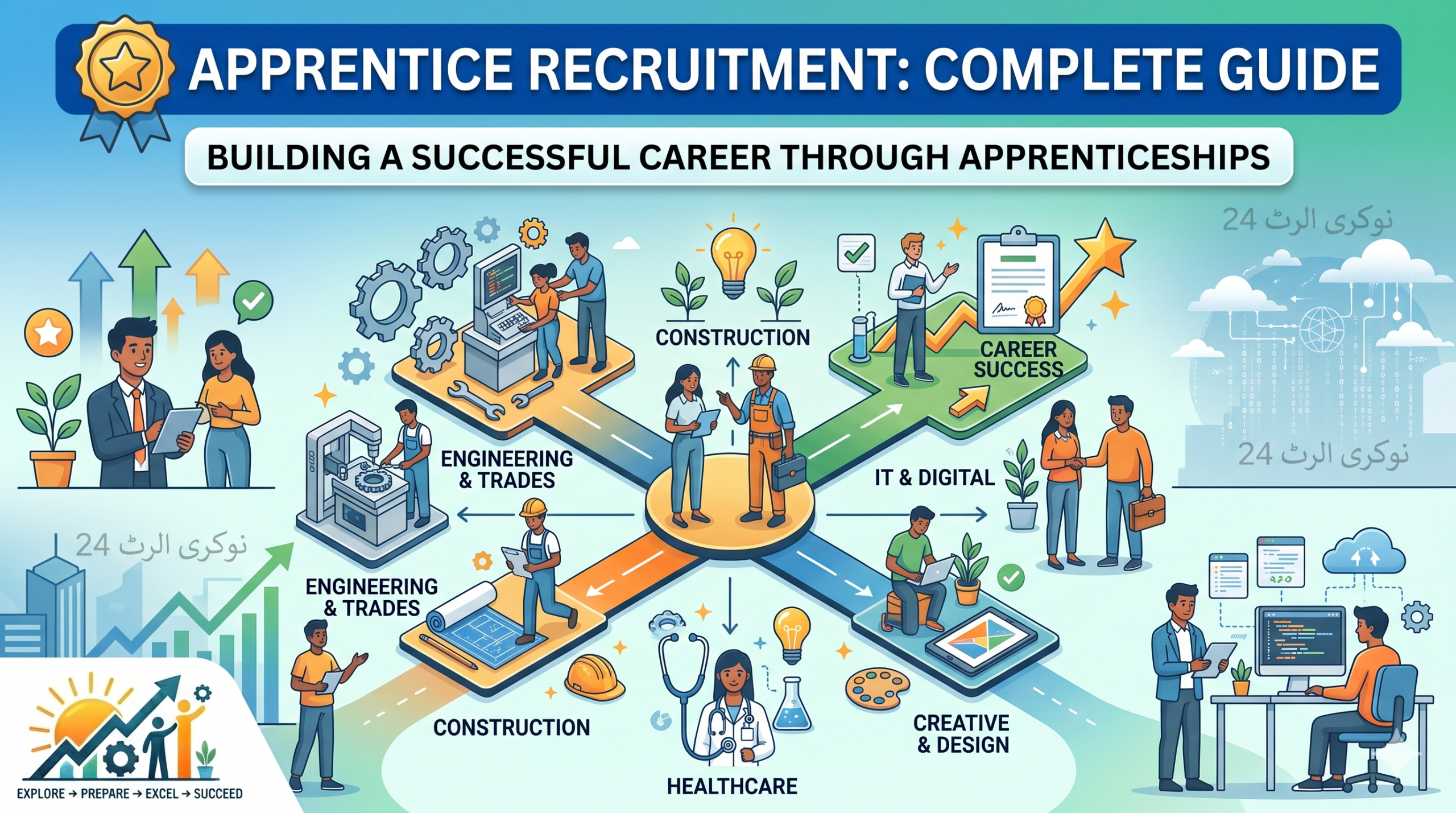
Introduction
Apprentice recruitment has become one of the most effective ways for students, fresh graduates, and job seekers to gain practical work experience while learning valuable industry skills. In today’s competitive job market, employers increasingly prefer candidates who possess both theoretical knowledge and hands-on experience. This is where apprenticeship programs play a crucial role.
An apprenticeship is a structured training program that allows individuals to work under experienced professionals while earning a stipend and developing job-ready skills. Various government departments, public sector undertakings (PSUs), railways, banks, manufacturing companies, IT firms, and private organizations regularly conduct apprentice recruitment drives to attract young talent.
For many candidates, apprenticeships serve as a bridge between education and employment. They provide exposure to real-world work environments, professional networking opportunities, and a strong foundation for long-term career growth. Whether you have completed 10th grade, 12th grade, ITI, diploma, graduation, or technical education, apprenticeship opportunities are available across multiple industries.
This comprehensive guide explains everything about apprentice recruitment, eligibility requirements, benefits, application procedures, preparation strategies, and career advantages to help you make informed decisions about your future.
What Is Apprentice Recruitment?
Apprentice recruitment refers to the process through which organizations hire candidates for apprenticeship training programs.
These programs are designed to:
- Develop practical skills
- Provide workplace experience
- Improve employability
- Train future professionals
- Support industry workforce development
Apprentices work under trained supervisors and gain industry-specific knowledge through practical training.
Why Apprenticeships Are Important
Apprenticeships offer a unique combination of learning and earning.
Key advantages include:
- Real-world experience
- Professional skill development
- Industry exposure
- Stipend during training
- Better job opportunities
- Improved confidence
Many employers consider apprenticeship experience valuable when hiring permanent employees.
Types of Apprentice Recruitment Programs
Different industries offer various apprenticeship programs.
Trade Apprenticeship
Trade apprenticeships focus on technical and vocational skills.
Examples include:
- Electrician
- Fitter
- Welder
- Mechanic
- Carpenter
Graduate Apprenticeship
Designed for degree holders.
Popular fields include:
- Engineering
- Information Technology
- Management
- Finance
Technician Apprenticeship
Suitable for diploma holders seeking technical experience.
Government Apprentice Recruitment Opportunities
Government organizations regularly recruit apprentices.
Popular sectors include:
- Indian Railways
- Public Sector Undertakings (PSUs)
- Defence Organizations
- Power Corporations
- Oil and Gas Companies
- Telecommunications
Government apprenticeships are highly sought after due to their structured training programs.
Private Sector Apprenticeship Opportunities
Private companies also offer extensive apprenticeship programs.
Industries include:
- Manufacturing
- Automotive
- Information Technology
- Healthcare
- Construction
- Retail
Private apprenticeships often expose candidates to modern technologies and business practices.
Who Can Apply for Apprentice Recruitment?
Eligibility varies by organization and position.
10th Pass Candidates
Opportunities in trade-based apprenticeship programs.
12th Pass Candidates
Entry-level apprenticeship opportunities in multiple sectors.
ITI Candidates
One of the largest categories eligible for apprentice recruitment.
Diploma Holders
Suitable for technician apprentice programs.
Graduates
Eligible for graduate apprentice positions in many organizations.
Benefits of Apprentice Recruitment
Apprenticeship programs provide numerous benefits.
Practical Learning
Candidates gain hands-on experience beyond classroom education.
Industry Exposure
Working in professional environments improves understanding of workplace expectations.
Financial Support
Most apprenticeship programs provide monthly stipends.
Career Opportunities
Many apprentices receive permanent job offers after successful completion.
Skills Developed Through Apprenticeships
Apprenticeships help develop both technical and soft skills.
Technical Skills
- Equipment handling
- Process management
- Technical troubleshooting
- Industry-specific operations
Soft Skills
- Communication
- Teamwork
- Time management
- Problem-solving
- Professional behavior
These skills remain valuable throughout a person’s career.
How to Find Apprentice Recruitment Opportunities
Finding reliable apprenticeship vacancies is essential.
Use these sources:
- Official company websites
- Government employment portals
- Apprenticeship training portals
- Employment news publications
- Career websites
Regular monitoring helps candidates identify opportunities quickly.
Step-by-Step Application Process
Step 1: Read Official Notification
Understand eligibility, age limits, and requirements.
Step 2: Register Online
Create an account on the relevant recruitment portal.
Step 3: Complete Application Form
Provide accurate personal and educational details.
Step 4: Upload Required Documents
Ensure all documents meet specified guidelines.
Step 5: Submit Application
Review details carefully before final submission.
Documents Required for Apprentice Recruitment
Candidates should prepare the following documents:
- Aadhaar Card
- Educational Certificates
- ITI Certificate (if applicable)
- Diploma Certificate
- Graduation Certificate
- Passport-size Photographs
- Signature
- Category Certificate
- Domicile Certificate
Keeping documents ready helps simplify the application process.
Selection Process for Apprentice Recruitment
The selection process varies across organizations.
Common methods include:
Merit-Based Selection
Based on academic performance.
Document Verification
Verification of educational and personal records.
Medical Examination
Ensures candidates meet required health standards.
Interview
Some organizations conduct personal interviews.
Understanding the process helps candidates prepare effectively.
How to Prepare for Apprentice Recruitment
Preparation improves your chances of selection.
Improve Technical Knowledge
Review concepts related to your field of study.
Stay Updated
Monitor recruitment notifications regularly.
Organize Documents
Keep all certificates and identification documents ready.
Develop Communication Skills
Good communication creates a positive impression during interviews.
Practical Tips for Success
Follow these practical recommendations:
- Apply as early as possible
- Read official notifications carefully
- Verify eligibility before applying
- Maintain updated documents
- Practice interview questions
- Learn basic computer skills
- Improve workplace communication
Small improvements can make a significant difference.
Common Mistakes to Avoid
Many candidates lose opportunities because of avoidable mistakes.
Avoid These Errors
- Missing application deadlines
- Entering incorrect information
- Uploading unclear documents
- Ignoring eligibility requirements
- Not checking official updates
- Waiting until the last day to apply
Careful attention to detail can prevent these problems.
Simple Daily Routine for Apprentice Aspirants
A structured routine can improve preparation.
Morning
- Check recruitment notifications
- Read industry-related news
Afternoon
- Review technical concepts
- Update application records
Evening
- Practice interview preparation
- Learn new professional skills
Night
- Review achievements
- Plan next day’s tasks
Consistency helps build confidence and readiness.
Long-Term Benefits of Apprenticeship Training
Apprenticeships provide long-lasting career advantages.
Better Employability
Employers value practical experience.
Faster Career Growth
Experienced candidates often progress more quickly.
Professional Network
Workplace relationships can create future opportunities.
Enhanced Confidence
Real-world experience improves decision-making and communication skills.
Build a Sustainable Healthy Lifestyle During Training
Professional success depends on personal well-being.
Maintain Physical Health
- Exercise regularly
- Eat balanced meals
- Stay hydrated
Support Mental Wellness
- Manage stress effectively
- Practice mindfulness
- Maintain positive relationships
Prioritize Sleep
Adequate rest improves concentration and productivity.
Healthy habits contribute to better workplace performance.
Future of Apprentice Recruitment
The apprenticeship landscape continues to evolve.
Emerging trends include:
- Digital learning integration
- Hybrid training programs
- Industry-focused certifications
- Technology-driven skill development
- Greater collaboration between educational institutions and employers
These developments create even more opportunities for aspiring professionals.
Why Apprenticeships Are a Smart Career Choice
Apprenticeships provide an excellent foundation for career success.
Advantages include:
- Learn while earning
- Industry-relevant skills
- Lower career risk
- Better employment prospects
- Professional experience before full-time employment
For many young professionals, apprenticeships serve as the first step toward a successful career.
Frequently Asked Questions (FAQs)
1. What is apprentice recruitment?
Apprentice recruitment is the process of selecting candidates for structured training programs that combine practical work experience with skill development.
2. Do apprentices receive a salary?
Most apprenticeship programs provide a monthly stipend rather than a full salary.
3. Can freshers apply for apprentice positions?
Yes. Apprenticeships are specifically designed for freshers and early-career candidates.
4. Is apprenticeship experience useful for future jobs?
Yes. Employers highly value practical work experience gained through apprenticeships.
5. Who is eligible for apprenticeship programs?
Eligibility depends on the position but may include 10th pass, 12th pass, ITI, diploma, and graduate candidates.
6. Are government apprenticeships better than private apprenticeships?
Both offer valuable experience. The best option depends on career goals and industry preferences.
7. Can apprentices get permanent jobs after training?
Many organizations consider successful apprentices for future employment opportunities.
Conclusion
Apprentice recruitment plays a vital role in preparing individuals for successful careers by combining education with practical workplace experience. Whether offered by government organizations, public sector undertakings, or private companies, apprenticeship programs help candidates develop technical expertise, professional skills, and industry knowledge that employers value highly.
For students, fresh graduates, ITI candidates, diploma holders, and young professionals, apprenticeships provide a unique opportunity to learn while earning. They reduce the gap between academic learning and workplace expectations, making candidates more employable and confident in their abilities.
Success in apprentice recruitment requires awareness, preparation, timely applications, and continuous skill development. Candidates who stay updated with opportunities, maintain organized documents, and focus on personal growth can significantly improve their chances of selection.
As industries continue to evolve and demand skilled professionals, apprenticeship programs will remain an important pathway to employment and career advancement. By taking advantage of these opportunities, aspiring professionals can build strong foundations for long-term success and achieve their career goals with confidence.