Introduction
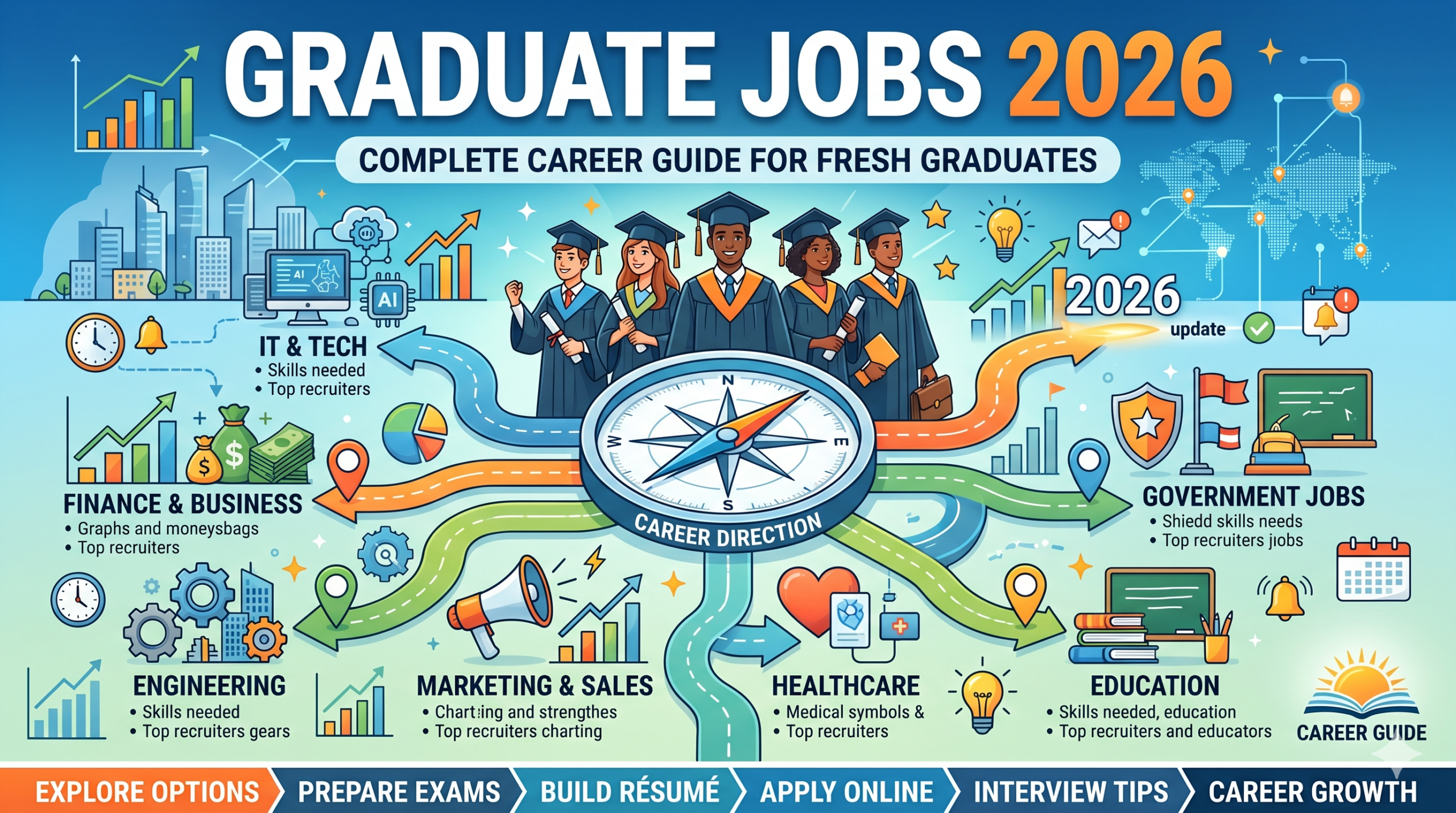
Graduating from college is one of the most exciting milestones in life. However, finding the right job after graduation can often feel challenging and overwhelming. As industries continue to evolve and technology reshapes workplaces, graduate jobs 2026 offer more opportunities than ever before. Companies across sectors are actively seeking talented graduates who can bring fresh ideas, digital skills, and innovative thinking to their organizations.
Whether you have completed a degree in engineering, business, arts, science, commerce, healthcare, information technology, or any other field, there are countless career paths available. From government jobs and corporate roles to remote work opportunities and startup careers, graduates have a wide range of options to explore.
The key to success is understanding the current job market, identifying in-demand skills, preparing a strong resume, and applying strategically. In this comprehensive guide, we will discuss everything you need to know about graduate jobs in 2026, including job opportunities, career planning, skill development, interview preparation, common mistakes to avoid, and practical steps to build a successful professional future.
Why Graduate Jobs Are Important in 2026
Graduate jobs serve as the foundation for a long-term career.
Some major benefits include:
- Gaining professional experience
- Building industry knowledge
- Developing workplace skills
- Creating professional networks
- Earning financial independence
- Establishing career direction
A strong first job can significantly influence future career growth.
Understanding the Graduate Job Market
The employment market continues to evolve rapidly.
Companies now seek candidates who possess:
- Technical knowledge
- Communication skills
- Problem-solving abilities
- Digital literacy
- Adaptability
- Teamwork capabilities
Graduates who continuously improve their skills often enjoy better employment opportunities.
Top Industries Hiring Graduates in 2026
Several industries are expected to offer substantial employment opportunities.
Information Technology
Popular roles include:
- Software Developer
- Web Developer
- Data Analyst
- Cybersecurity Associate
- Cloud Support Engineer
Banking and Finance
Opportunities include:
- Banking Associate
- Financial Analyst
- Relationship Executive
- Investment Assistant
Healthcare
Healthcare organizations require:
- Medical Assistants
- Healthcare Administrators
- Clinical Coordinators
- Research Associates
Education
Education remains a growing sector for graduates interested in teaching and training.
Government Graduate Jobs in 2026
Government careers remain highly attractive.
Popular graduate-level opportunities include:
- Civil Services
- Banking Jobs
- SSC CGL
- State Public Service Commission Exams
- Railway Recruitment
- Public Sector Undertakings (PSUs)
Government jobs provide stability, benefits, and career progression.
Private Sector Graduate Jobs
Private companies continue to hire graduates aggressively.
Common entry-level positions include:
- Business Analyst
- Marketing Executive
- Human Resources Associate
- Customer Success Executive
- Operations Coordinator
Private sector careers often provide faster growth opportunities.
Remote and Hybrid Job Opportunities
Flexible work arrangements have become increasingly popular.
Benefits include:
- Work-life balance
- Reduced commuting time
- Geographic flexibility
- Improved productivity
Graduates should explore both remote and hybrid job options.
Most In-Demand Skills for Graduates
Employers prioritize practical skills alongside academic qualifications.
Technical Skills
Examples include:
- Data Analysis
- Programming
- Digital Marketing
- Graphic Design
- Project Management
Soft Skills
Equally important skills include:
- Communication
- Leadership
- Time Management
- Teamwork
- Critical Thinking
Developing both categories improves employability.
How to Build a Strong Resume
Your resume creates the first impression.
Essential Resume Sections
- Personal Information
- Career Objective
- Education
- Skills
- Internships
- Projects
- Certifications
- Achievements
Keep formatting clean and professional.
Writing an Effective Cover Letter
A cover letter can increase interview opportunities.
Include:
- Introduction
- Relevant qualifications
- Skills and achievements
- Interest in the company
- Professional closing statement
Personalized cover letters perform better than generic ones.
Best Job Search Strategies
Finding graduate jobs requires a structured approach.
Effective Methods
- Use job portals regularly.
- Visit company career pages.
- Attend career fairs.
- Build professional networks.
- Connect with recruiters.
- Join industry communities.
Consistency plays a major role in job search success.
Importance of Internships
Internships provide valuable workplace exposure.
Benefits include:
- Real-world experience
- Professional references
- Skill development
- Networking opportunities
- Improved confidence
Many companies hire successful interns as full-time employees.
Preparing for Graduate Job Interviews
Interview preparation is essential.
Before the Interview
- Research the company
- Review the job description
- Practice common questions
- Prepare examples of achievements
During the Interview
- Communicate clearly
- Maintain confidence
- Show enthusiasm
- Ask thoughtful questions
Preparation often leads to better performance.
Building a Professional Online Presence
Employers increasingly review online profiles.
Key Steps
- Create a professional profile
- Showcase projects
- Highlight achievements
- Share industry insights
- Connect with professionals
A strong digital presence can attract career opportunities.
Common Mistakes to Avoid
Many graduates unintentionally reduce their chances of success.
Avoid these mistakes:
- Applying without reading job descriptions
- Using generic resumes
- Ignoring networking opportunities
- Poor interview preparation
- Lack of skill development
- Missing application deadlines
- Applying randomly without a strategy
Avoiding these mistakes can improve results significantly.
Simple Daily Action Plan for Job Seekers
A consistent routine helps maintain momentum.
Morning
- Check new job postings
- Read industry news
Afternoon
- Apply for suitable positions
- Customize resumes and cover letters
Evening
- Practice interview questions
- Learn a new skill
Night
- Review applications submitted
- Plan tasks for the next day
Daily consistency often produces better results than occasional intense efforts.
Long-Term Benefits of Graduate Jobs
The first professional role creates long-lasting advantages.
Career Growth
Experience opens doors to promotions and advanced positions.
Financial Stability
Steady income helps build financial security.
Professional Development
Employees gain valuable industry knowledge.
Expanded Network
Professional relationships can create future opportunities.
Build a Sustainable Healthy Lifestyle
Career success is easier when supported by good health.
Physical Health
Maintain:
- Regular exercise
- Balanced nutrition
- Adequate hydration
Mental Health
Practice:
- Stress management
- Positive thinking
- Mindfulness techniques
Sleep and Recovery
Aim for 7–8 hours of quality sleep each night.
A healthy lifestyle supports productivity and career performance.
Future Trends in Graduate Employment
The workplace continues to evolve rapidly.
Expected trends include:
- Increased remote work
- AI-assisted job roles
- Digital transformation
- Growing demand for technical skills
- Greater emphasis on adaptability
Graduates who embrace lifelong learning will remain competitive.
How to Stay Competitive in 2026
Continuous improvement is essential.
Focus Areas
- Learn industry-relevant skills
- Earn certifications
- Build a portfolio
- Improve communication abilities
- Stay informed about market trends
Employers value candidates who demonstrate growth and initiative.
Frequently Asked Questions (FAQs)
1. What are graduate jobs?
Graduate jobs are entry-level positions specifically designed for candidates who have recently completed a college or university degree.
2. Which industries offer the most graduate jobs in 2026?
Information technology, finance, healthcare, education, digital marketing, and government sectors are expected to offer significant opportunities.
3. Do I need experience to get a graduate job?
Most graduate roles are designed for freshers, although internships and projects can strengthen applications.
4. How can I improve my chances of getting hired?
Develop relevant skills, create a strong resume, prepare for interviews, and apply consistently.
5. Are remote graduate jobs available?
Yes. Many organizations now offer remote and hybrid opportunities for graduates.
6. How important are soft skills?
Soft skills such as communication, teamwork, and problem-solving are highly valued by employers.
7. Can graduate jobs lead to long-term career success?
Absolutely. A strong start can create opportunities for promotions, leadership roles, and career advancement.
Conclusion
Graduate jobs in 2026 provide exciting opportunities for fresh graduates across multiple industries. Whether you choose a government career, corporate role, startup environment, or remote position, the key to success lies in preparation, continuous learning, and strategic job searching.
The modern employment market rewards candidates who combine academic knowledge with practical skills, adaptability, and strong communication abilities. Building a professional resume, gaining internship experience, networking effectively, and preparing thoroughly for interviews can significantly improve your chances of securing the right opportunity.
Additionally, maintaining a healthy lifestyle, staying motivated, and committing to lifelong learning will support both personal and professional growth. While the job search process may sometimes feel challenging, persistence and consistency often lead to positive results.
As new industries emerge and workplace expectations continue to evolve, graduates who remain proactive and open to learning will be well-positioned for long-term success. Start your career journey today, focus on continuous improvement, and take confident steps toward building a rewarding and successful future.